|
Application
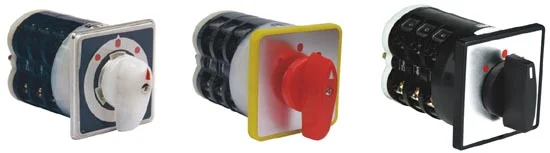
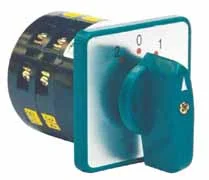
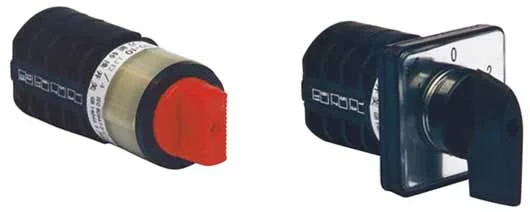
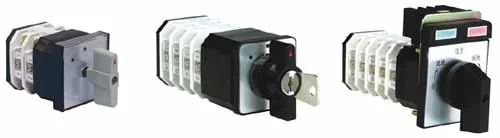
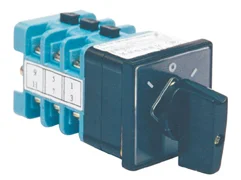
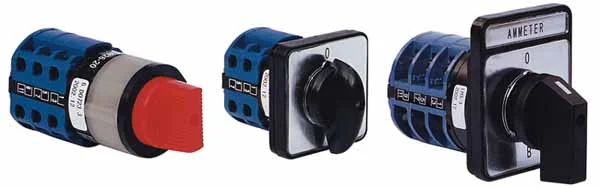
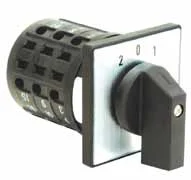
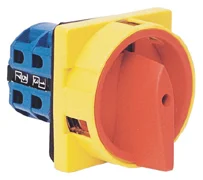
LW5D rotary switch applied to change over of circuits and control motors as well.
Designation
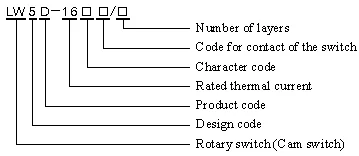
** Use as control switches
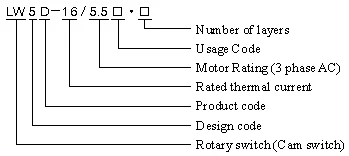
** Use as motor switch
Re:Q1、Q2 for start and run; N for reversing; S for 2 speed; SN for 2 speed and revesing.
Diagram for the operation and position of handle
|
Operation
angle |
Character
code |
Position of handle |
|
Sping return |
A |
|
|
|
|
|
0° |
←45° |
|
|
|
|
|
|
B |
|
|
|
|
45°→ |
0° |
←45° |
|
|
|
|
|
|
Limited
movement |
C |
|
|
|
|
|
0° |
45° |
|
|
|
|
|
|
D |
|
|
|
|
45° |
0° |
45° |
|
|
|
|
|
|
E |
|
|
|
|
45° |
0° |
45° |
90° |
|
|
|
|
|
F |
|
|
|
90° |
45° |
0° |
45° |
90° |
|
|
|
|
|
G |
|
|
|
90° |
45° |
0° |
45° |
90° |
135° |
|
|
|
|
H |
|
|
135° |
90° |
45° |
0° |
45° |
90° |
135° |
|
|
|
|
I |
|
|
135° |
90° |
45° |
0° |
45° |
90° |
135° |
180° |
|
|
|
J |
|
120° |
90° |
60° |
30° |
0° |
30° |
60° |
90° |
120° |
|
|
|
K |
|
120° |
90° |
60° |
30° |
0° |
30° |
60° |
90° |
120° |
150° |
|
|
L |
150° |
120° |
90° |
60° |
30° |
0° |
30° |
60° |
90° |
120° |
150° |
|
|
M |
150° |
120° |
90° |
60° |
30° |
0° |
30° |
60° |
90° |
120° |
150° |
180° |
|
N |
|
|
|
|
45°│45° |
|
|
|
|
|
|
P |
|
|
|
|
90° |
0° |
90° |
|
|
|
|
|
Technical parameters
|
application |
Use as control switches |
Use as motor switch |
|
Rated thermal current Ith |
A |
16 |
16 |
|
Rated working voltage Ue |
V |
125 |
220 |
250 |
380 |
400 |
500 |
380 |
|
Rated working current Ie |
|
|
|
|
|
|
|
|
|
AC-15 |
A |
|
4.6 |
|
2.6 |
|
2.0 |
|
|
AC-3 |
A |
|
|
|
|
|
|
12 |
|
AC-4 |
A |
|
|
|
|
|
|
3.5 |
|
DC-132-breaking point |
A |
0.55 |
|
0.27 |
|
0.14 |
|
|
|
DC-13 4-breaking point |
A |
0.82 |
|
0.41 |
|
0.20 |
|
|
Mechanical life
Mechanical life without load:0.3×10⁶times,operation frequency is 300 times/h.
Mechanical life with load:0.1×10⁶times under AC-15,0.1×106times under DC-13,0.1×106times under AC-3,0.1×106times under AC-4,operation frequency is 120 times/h. Dimensions
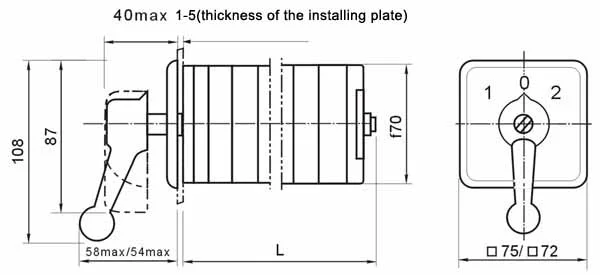
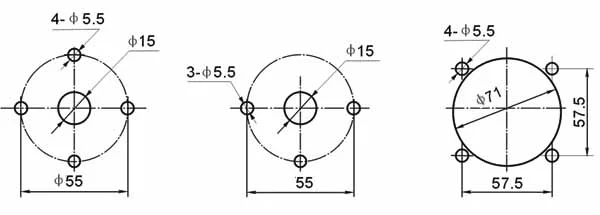
Limited movement:Lmax+40max(knob)
Lmax+58max(handle)
Lmax=44+16n(n for number of layers) |
Sping return:Lmax+40max(knob)
Lmax+58max(handle)
Lmax=48+16n(n for number of layers) |
Installation
|