Global Trade · Reliable Power Solutions E-mail: [email protected]
Electrical Items › Surge Arrester

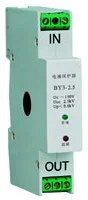
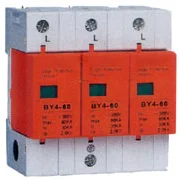
DC Surge Arrestor

DC Surge protective device (Surge Arrestor) Technical Parameters DC Suger Protective Device GC 110 GD 110 GC 48 GD 48 GC 24 GD 24 GF 110 GF…

  • Category: Electrical Items › Surge Arrester
  • Model: 1736
  • Brand / OEM: ELEHPD — OEM branding available
  • Export: Worldwide, FOB Ningbo / Shanghai
Request a quotation for this Surge Arrester

About the DC Surge Arrestor

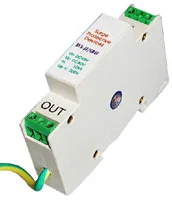
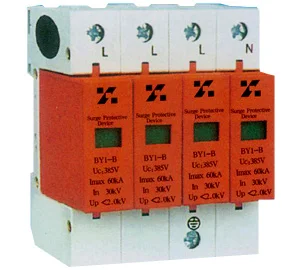
The DC Surge Arrestor is part of the ELEHPD Surge Arrester range. DC Surge protective device (Surge Arrestor) Technical Parameters DC Suger Protective Device GC 110 GD 110 GC 48 GD 48 GC 24 GD 24 GF 110 GF 48 GF 24 Operating voltage Un DC110V DC48V DC24V DC 110V DC 48V DC24V Maximum continuous Operating voltage Uc DC150V DC60V DC30V DC 150V DC 60V DC 30V Voltage limiting Up(10/700 µ s) ≤ 500V ≤ 200V ≤ 120V ≤ 500V ≤ 200V ≤ 120V Nominal discharge curren ELEHPD manufactures and exports low voltage electrical products from Yueqing, Zhejiang, China, supplying distributors, panel builders, M&E contractors and OEM buyers worldwide.

Typical applications

How to specify the right Surge Arrester

  1. Match the rated current to the circuit design current, then check the cable ampacity
  2. Pick the trip curve to the load: B for resistive/lighting, C for general mixed loads, D for motors and transformers
  3. Confirm the breaking capacity meets the prospective short-circuit current at the point of installation
  4. Verify the pole configuration (1P, 1P+N, 2P, 3P, 3P+N, 4P) against the system earthing arrangement

Specifications


DC Surge protective device (Surge Arrestor)

Technical Parameters
DC Suger Protective Device
GC 110
GD 110
GC 48
GD 48
GC 24
GD 24
GF 110
GF 48
GF 24
Operating voltage Un
DC110V
DC48V
DC24V
DC 110V
DC 48V
DC24V
Maximum continuous Operating voltage Uc
DC150V
DC60V
DC30V
DC 150V
DC 60V
DC 30V
Voltage limiting Up(10/700 µ s)
≤ 500V
≤ 200V
≤ 120V
≤ 500V
≤ 200V
≤ 120V
Nominal discharge current In(8/20 µ s) kA
10kA
Impulse protective voltage Ur(1kV/ µ s)
≤ 600V
Frequency range
2M Hz
10MHz
2M Hz
10MHz
2M Hz
10MHz
100MHz
Insertion loss
<0.5db
<3db
Interface form
Connector
Protective feet
1.2
Protective way
Full protective mode
Response time
<10 ns
Introduction
This type SPD, using the connector method, is available with lots of return circuit, such as signal return circuit, 4 return circuits, 8 return circuits, 12 return circuits, 16 return circuits and 24 return circuits. It is suitable to communication, computer and self-controlling fire warning system and protecting the network shocked by thunder or surge over voltage.
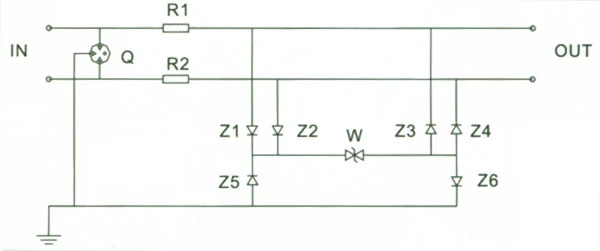
Electric Principle Picture
Usage and Installation
It is used in the telephone-machine, fax-machine, DDN, ISDN special line, computer interface, remote signal line and the defence thunder protective device on the self-controlling line.

The meticulous design enables convenient installation.

The device which is fixed by 35 mm electric rail is connected to the input return circuit of the equipment. The equipment with many return circuits should adopt several group installation, and also can choose XXL-JZ series signal defence thunder case. After its installation, well earthing should be paid attention.

Bounding installation: Bounding installation with many return circuit can installed SPD compactly according to the need of user.

Frequently asked questions about the DC Surge Arrestor

What is the difference between an MCB and an MCCB?

An MCB (miniature circuit breaker) is a DIN-rail device for final circuits, typically rated up to 125 A with a fixed trip curve. An MCCB (moulded case circuit breaker) is a larger device for main and sub-main distribution, usually 16 A to 1600 A, with adjustable thermal and magnetic settings and a higher breaking capacity. Use an MCB for branch circuits and an MCCB where you need adjustability or higher fault ratings.

How do I choose between a Type B, C and D trip curve?

Type B trips between 3 and 5 times rated current and suits resistive loads such as lighting and heaters. Type C trips between 5 and 10 times and is the general-purpose choice for socket circuits and mixed loads. Type D trips between 10 and 20 times and is used for loads with high inrush, such as motors, transformers and large LED drivers.

What does 6 kA breaking capacity mean in practice?

It is the maximum prospective short-circuit current the device can safely interrupt. 6 kA covers most domestic and light commercial installations. Where the transformer is close and the fault level is higher, specify 10 kA devices so the breaker still clears the fault without damage.

Can these devices be supplied with your own brand?

Yes. OEM branding, buyer-specific labels, custom carton print and private-model numbering can be arranged on qualified order volumes.

Related Surge Arrester models

Further reading