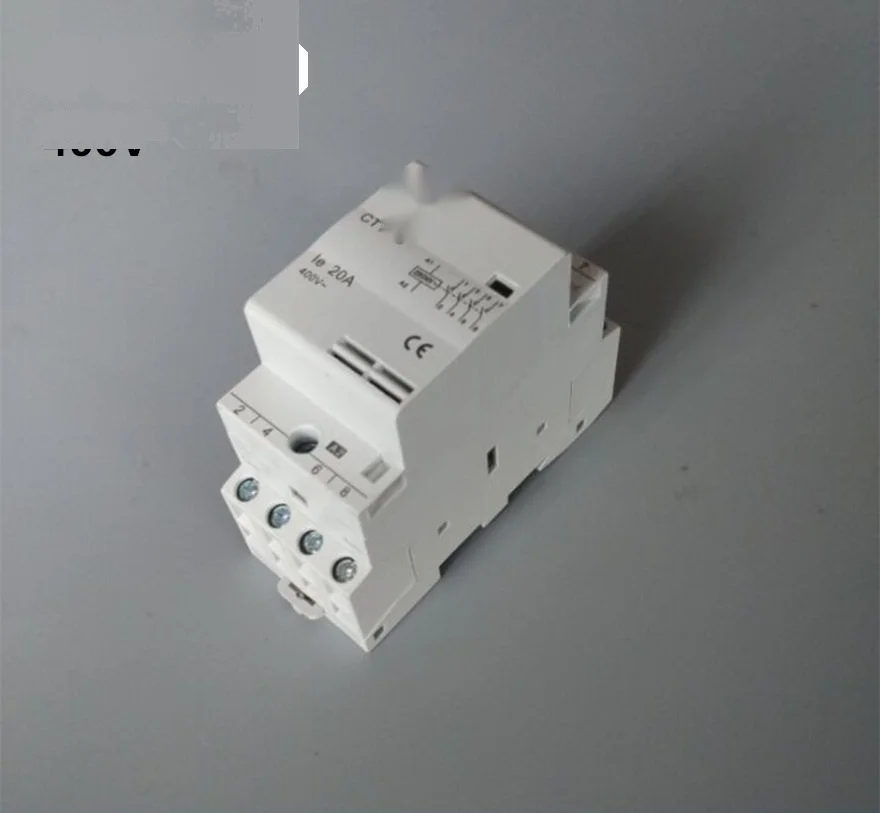
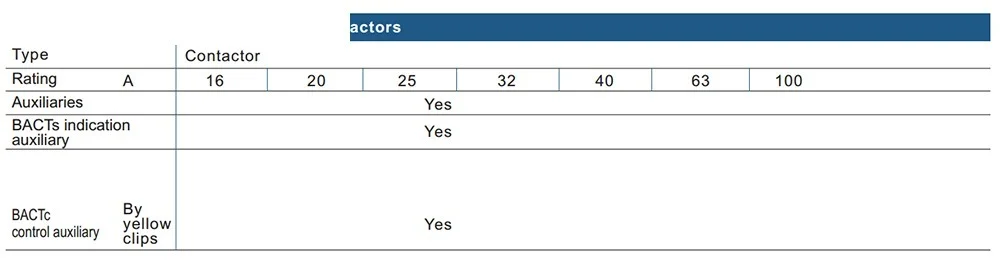
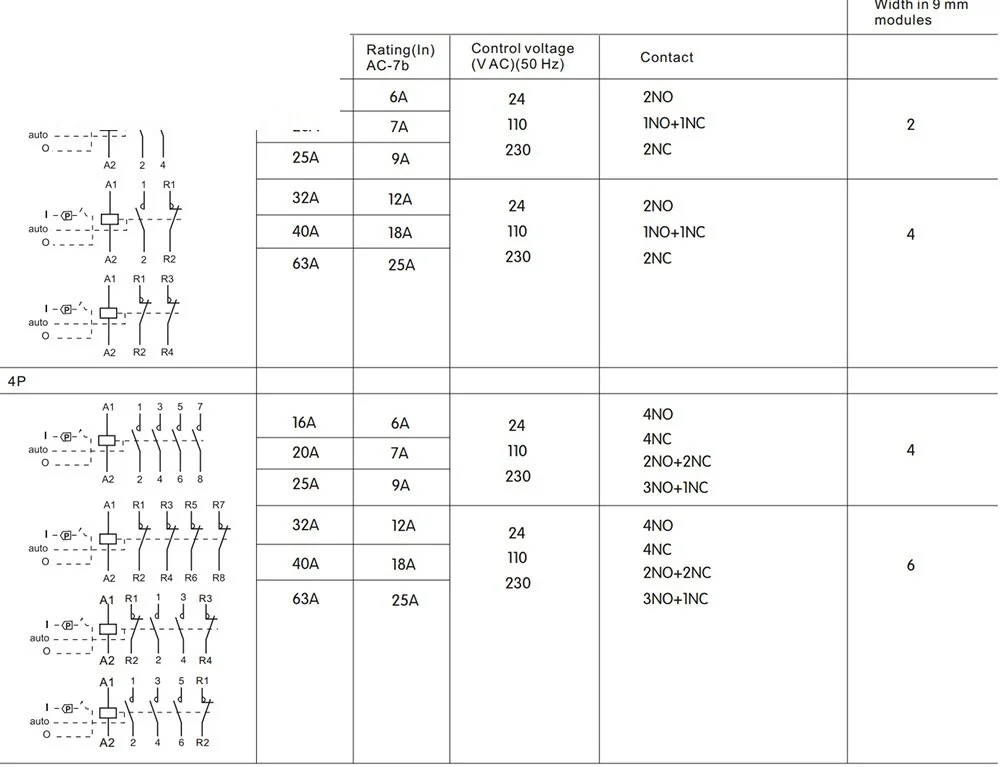
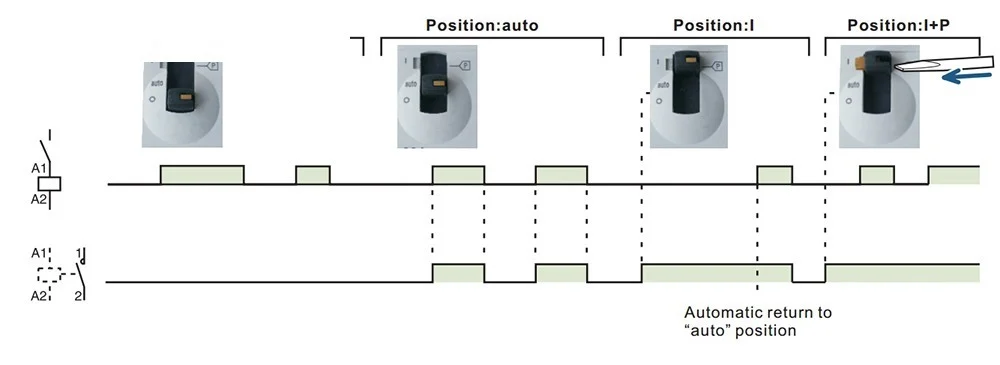
About the CT1-25 50/ 2NO+2NC Din rail Household AC
The CT1-25 50/ 2NO+2NC Din rail Household AC is part of the ELEHPD Household Contactor range. CT1-25 50/ 2NO+2NC Din rail Household AC from the ELEHPD Household Contactor range. ELEHPD manufactures and exports low voltage electrical products from Yueqing, Zhejiang, China, supplying distributors, panel builders, M&E contractors and OEM buyers worldwide.
Full catalogue description: 4P CT1-25 400v 50/ 60HZ 2NO+2NC Din rail Household AC Contactor popular model
Typical applications
- Consumer units and distribution boards in residential buildings
- Commercial and retail fit-outs where selective protection is required
- Industrial control panels and machine-builder assemblies
- Solar PV, EV charger and battery-storage sub-circuits
- OEM equipment where a DIN-rail protective device is specified
How to specify the right Household Contactor
- Match the rated current to the circuit design current, then check the cable ampacity
- Pick the trip curve to the load: B for resistive/lighting, C for general mixed loads, D for motors and transformers
- Confirm the breaking capacity meets the prospective short-circuit current at the point of installation
- Verify the pole configuration (1P, 1P+N, 2P, 3P, 3P+N, 4P) against the system earthing arrangement
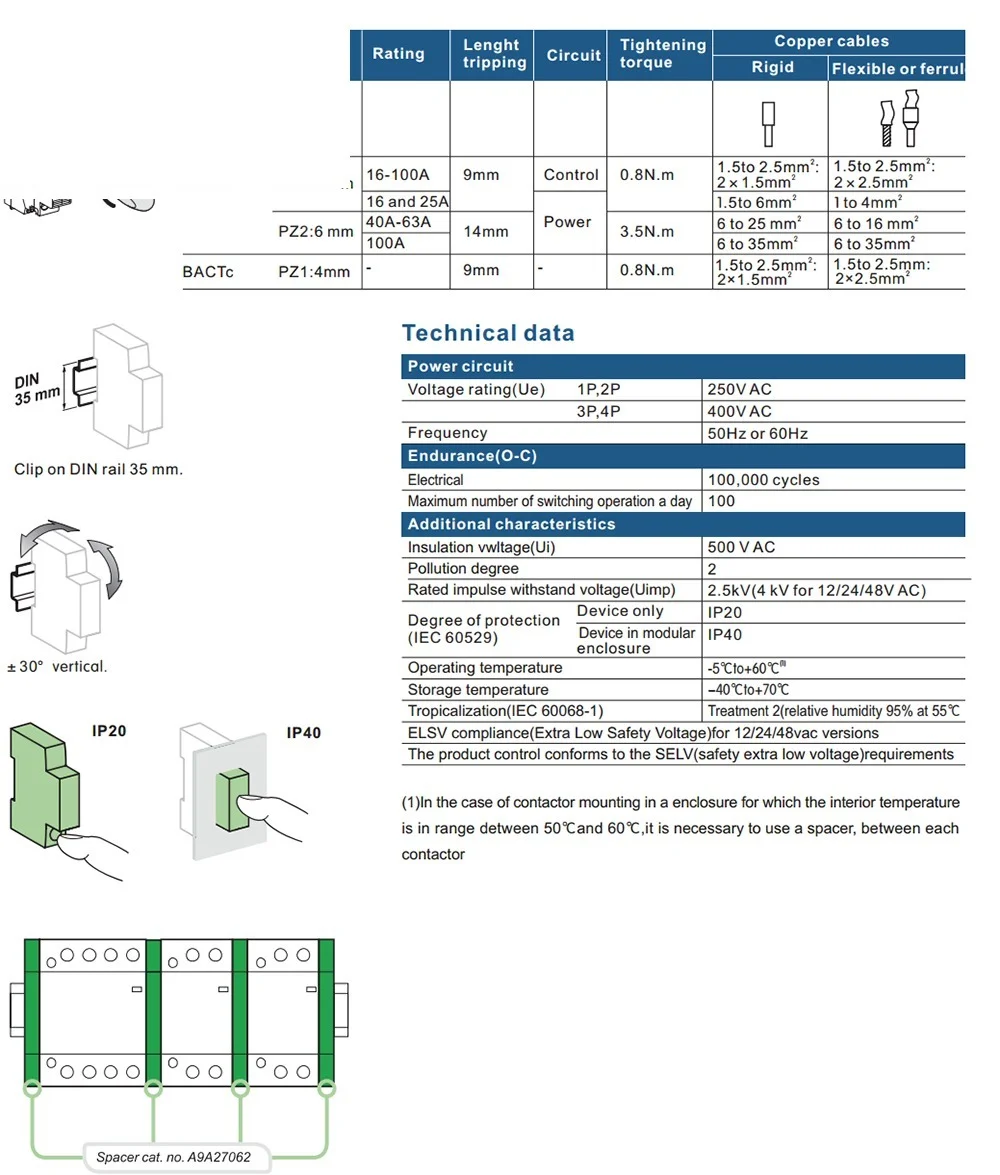
Specifications
4P CT1-25 400v 50/ 60HZ 2NO+2NC Din rail Household AC Contactor popular model
Frequently asked questions about the CT1-25 50/ 2NO+2NC Din rail Household AC
What is the difference between an MCB and an MCCB?
An MCB (miniature circuit breaker) is a DIN-rail device for final circuits, typically rated up to 125 A with a fixed trip curve. An MCCB (moulded case circuit breaker) is a larger device for main and sub-main distribution, usually 16 A to 1600 A, with adjustable thermal and magnetic settings and a higher breaking capacity. Use an MCB for branch circuits and an MCCB where you need adjustability or higher fault ratings.
How do I choose between a Type B, C and D trip curve?
Type B trips between 3 and 5 times rated current and suits resistive loads such as lighting and heaters. Type C trips between 5 and 10 times and is the general-purpose choice for socket circuits and mixed loads. Type D trips between 10 and 20 times and is used for loads with high inrush, such as motors, transformers and large LED drivers.
What does 6 kA breaking capacity mean in practice?
It is the maximum prospective short-circuit current the device can safely interrupt. 6 kA covers most domestic and light commercial installations. Where the transformer is close and the fault level is higher, specify 10 kA devices so the breaker still clears the fault without damage.
Can these devices be supplied with your own brand?
Yes. OEM branding, buyer-specific labels, custom carton print and private-model numbering can be arranged on qualified order volumes.
Further reading